Run a basketballfront office.Say anything.They remember.
You're the GM of a fictional 30-club league. Rival GMs, agents, your owner and your own players are AI characters who answer whatever you type. The game keeps score.
Your whole first season is free, opening night through free agency.Then it's $39.99 a year. Plays in your browser, phone included.
Talk to Hal Brenner
Playable
DeAndre's morale 34
Hal Brenner
agent to DeAndre Philips
NeutralTurn 0 of 6
DeAndre's morale
34(Unhappy)
30
Below 30, his trade clock starts.
Turn 0 of 6
Hal Brenner, scripted opening: You wanted a word. So have one. My client is the best player on your roster and he is watching the fourth quarter from a chair.
Unedited screenshot from the developer's own save: a lounge chat with one of his own players. Typed by the developer, answered live by the AI, scored within the game's limits: Morale −7.
_
Stuck? Try or
Hal and DeAndre exist only in this demo. Hal's first line is scripted; after that, the AI writes his replies live from the game's briefing for an agent with a complaint. DeAndre's morale starts at 34, and below 30 his trade clock starts. You get six turns.
DeAndre's morale is a number the game keeps, and one reply can move it 5 points at most.Stand-in and filtered replies don't move his morale.Scripted: the demo's filter answered that line instead of the AI. It still used a turn.The live demo is resting, so this reply is a scripted stand-in.The AI didn't answer this time, so this reply is a scripted stand-in.That didn't go through, so nothing was used. Try again.The demo takes 5 messages every 20 seconds and 30 a day from one network address, and this one has hit a limit. Wait a moment and try again; if it was the daily limit, the demo opens again within a day. Nothing was used.Couldn't reach the live demo, so your line wasn't delivered. It's back in the box; try again.The live demo took too long, so your line may not have arrived. Try again.One turn the page never received.The demo's session expired, so he has lost the thread. The demo's server drops a conversation 30 minutes after it starts.Hal is thinking.DeAndre's morale to . Mood: .Morale unchanged. Mood: .no changemorale unchangedunchangedYou:Live AIHal Brenner, live AI:Stand-in reply · FilteredStand-in reply, filtered. Hal Brenner:Stand-in replyStand-in reply. Hal Brenner:He walked out.At turn of 6. In the game, a walk-out is filed against your club, and every other agency hears about it.That's the demo's six turns.In the game this meeting would already be over: complaint meetings end at round four. He'd be back in other rooms, with his notes.This conversation is over.The demo allows six turns per conversation.Copied. Paste it anywhere.GM Dynasty demo: the airport lounge, midnight, week 14 (gmdynastygame.com)Replies marked "live AI" were written by an AI. Hal Brenner and DeAndre Philips are fictional and exist only in this demo.Hal Brenner [scripted opening]:You:Hal Brenner [live AI]:Hal Brenner [stand-in reply, filtered]:Hal Brenner [stand-in reply]:DeAndre's morale: -> .(the demo's session expired here)(one turn the page never received)He walked out at turn of 6.Six turns: the demo's limit.The demo allows six turns per conversation.Earlier conversation, no longer remembered
The job
You don't play the games. You run the team.
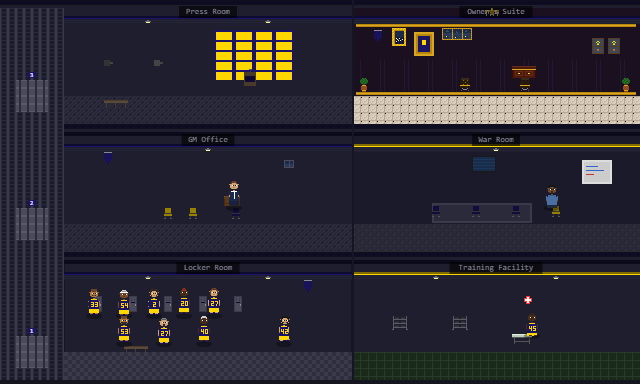
You decide who plays, who gets paid and who gets moved: draft, trade, sign free agents and work the salary cap. Each week the league fills your inbox. You answer it, then advance.
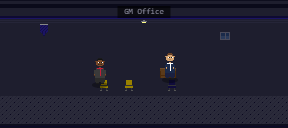
GM Office. Trades, contracts, and anyone who wants a word.Try a trade talk
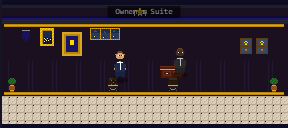
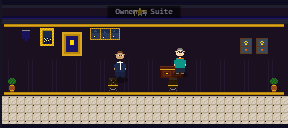
Owner’s Suite. Your owner grades you every week from week 5.Meet four owners
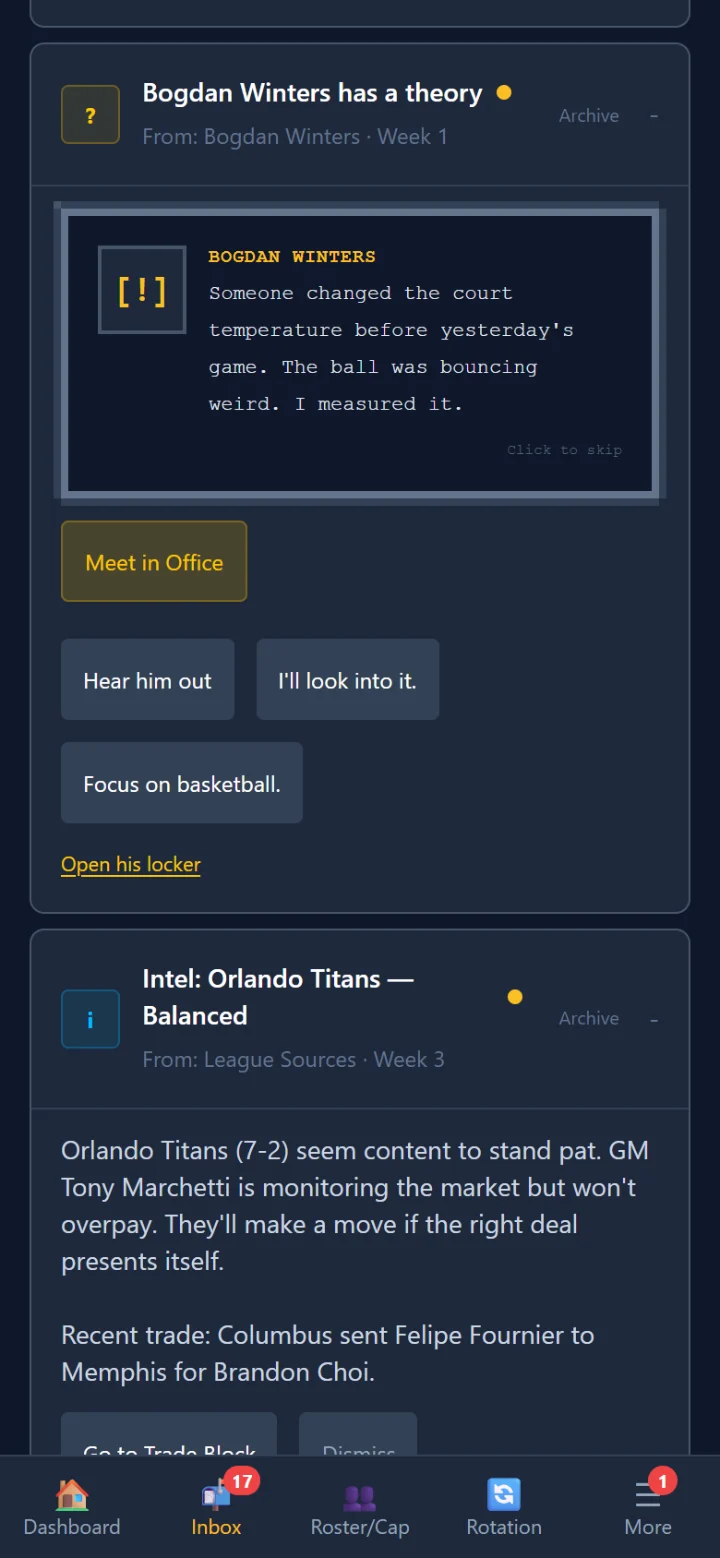
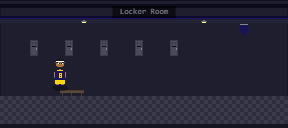
Locker Room. Minutes, morale, promises, and one player who sees conspiracies everywhere.Answer the theorist
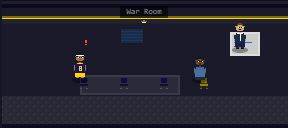
War Room. Scouting meetings in weeks 9, 17 and 24. Every club gets the same 15 credits.
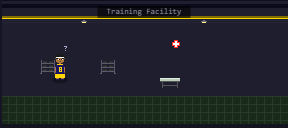
Training Facility. Injuries. Some of them real.How to fake one
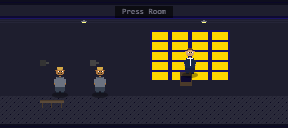
Press Room. Leaks, and the press conference where you put a player on the block.Get petty
The game shows you one room at a time, in your club’s colors. These are the Cincinnati Corsairs, with an example roster, drawn by the game’s own renderer.
Your free season · no card
Pre-season
Regular season · 26 weeks · 82 games
WWeek 5 theorist's first requestWWeek 19 theorist's second request
There's no clock. The league only moves when you do, so a season takes as long as you like.
On your phone
Run the team from your phone.
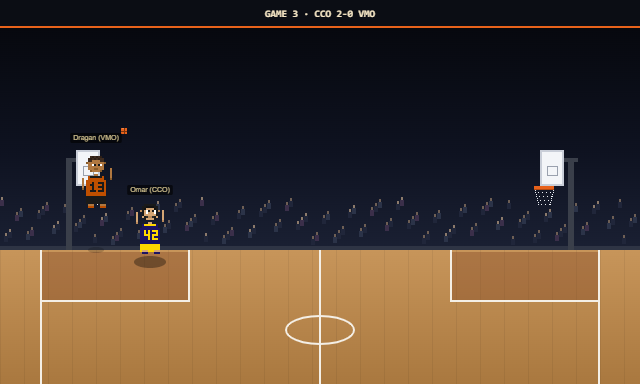
GM Dynasty runs in your phone's browser. Same game, same careers, nothing to install. Set the rotation at your desk, then play the next week from the couch.
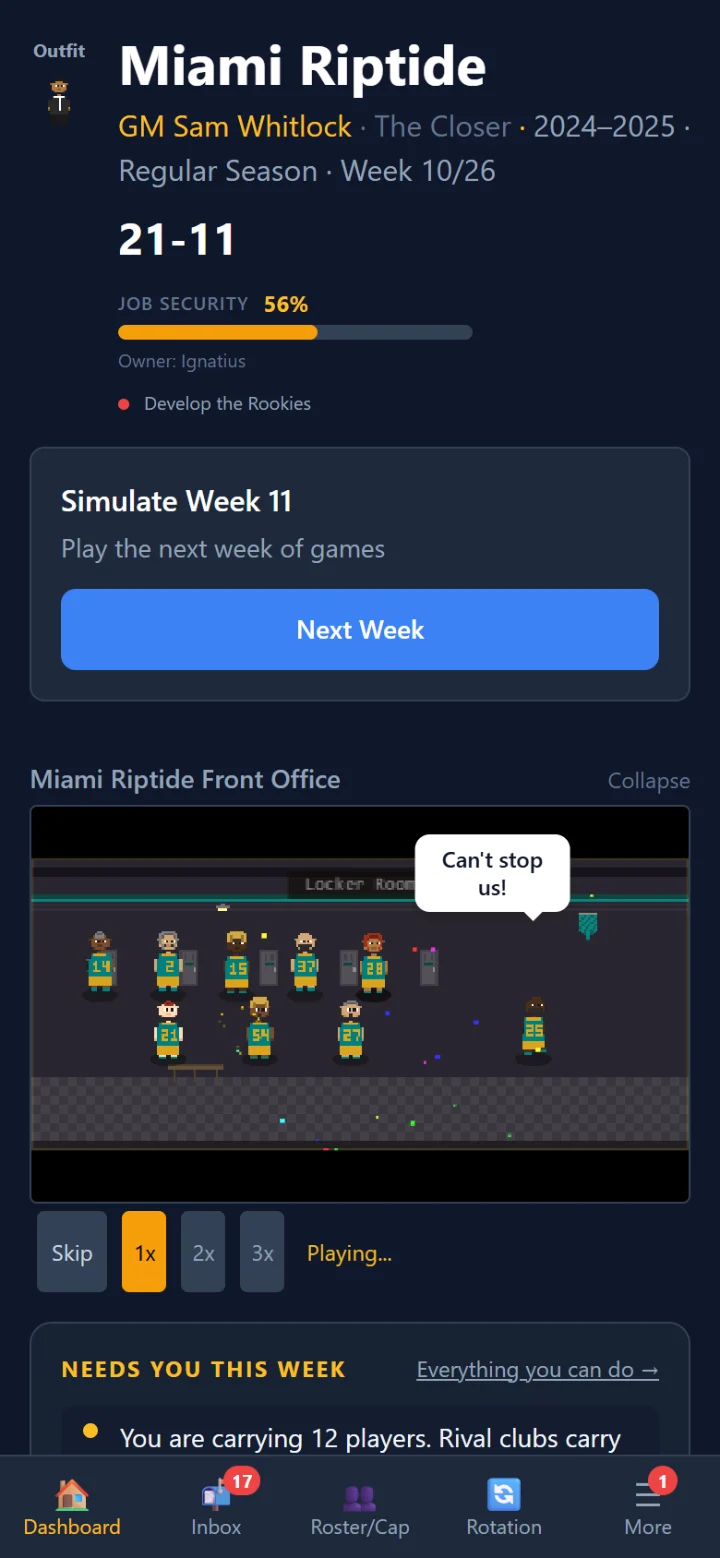
Dashboard. Your week at a glance: the record, the next game, and your front office, live.
Inbox. Letters from your owner, agents, the league and, yes, the player with a theory.
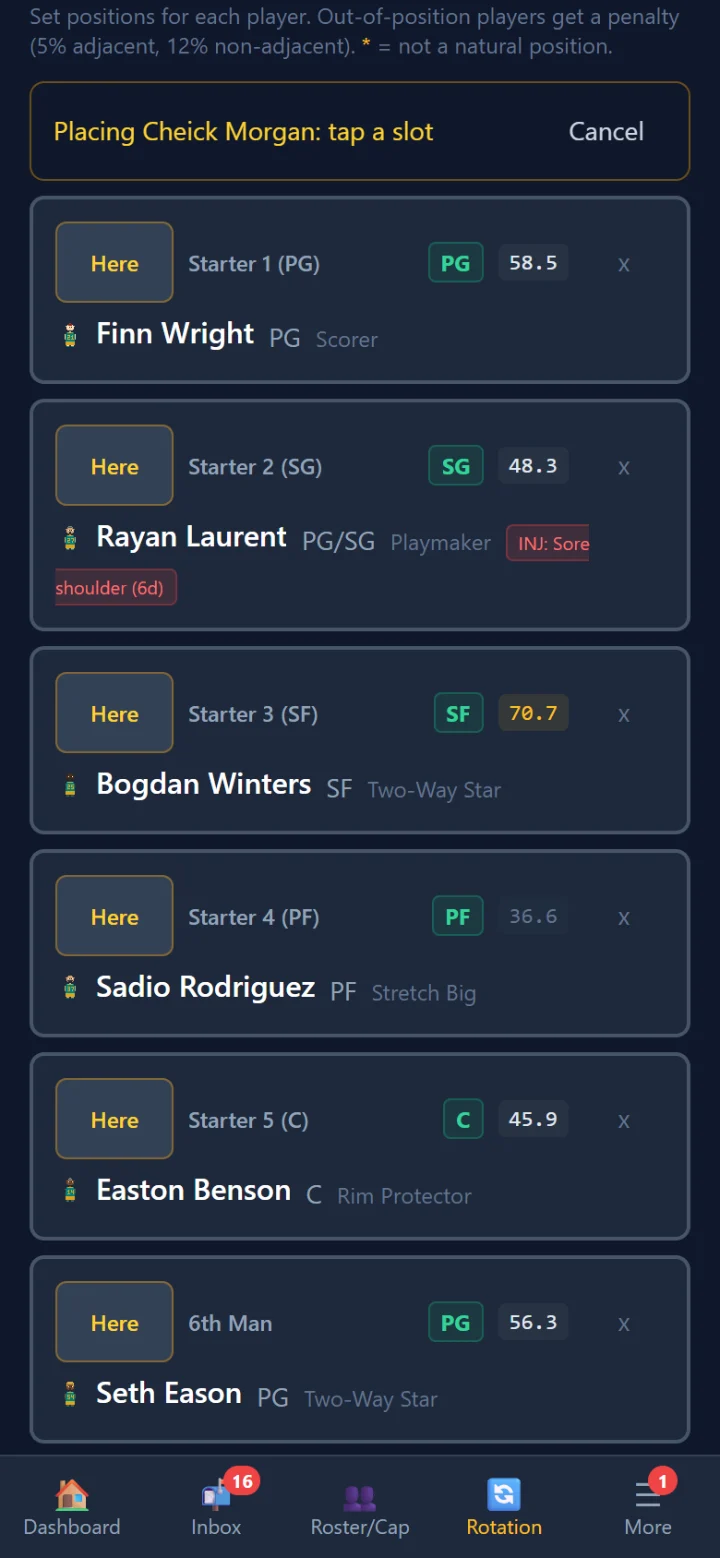
Rotation. Tap a player, then tap where he goes. No dragging.
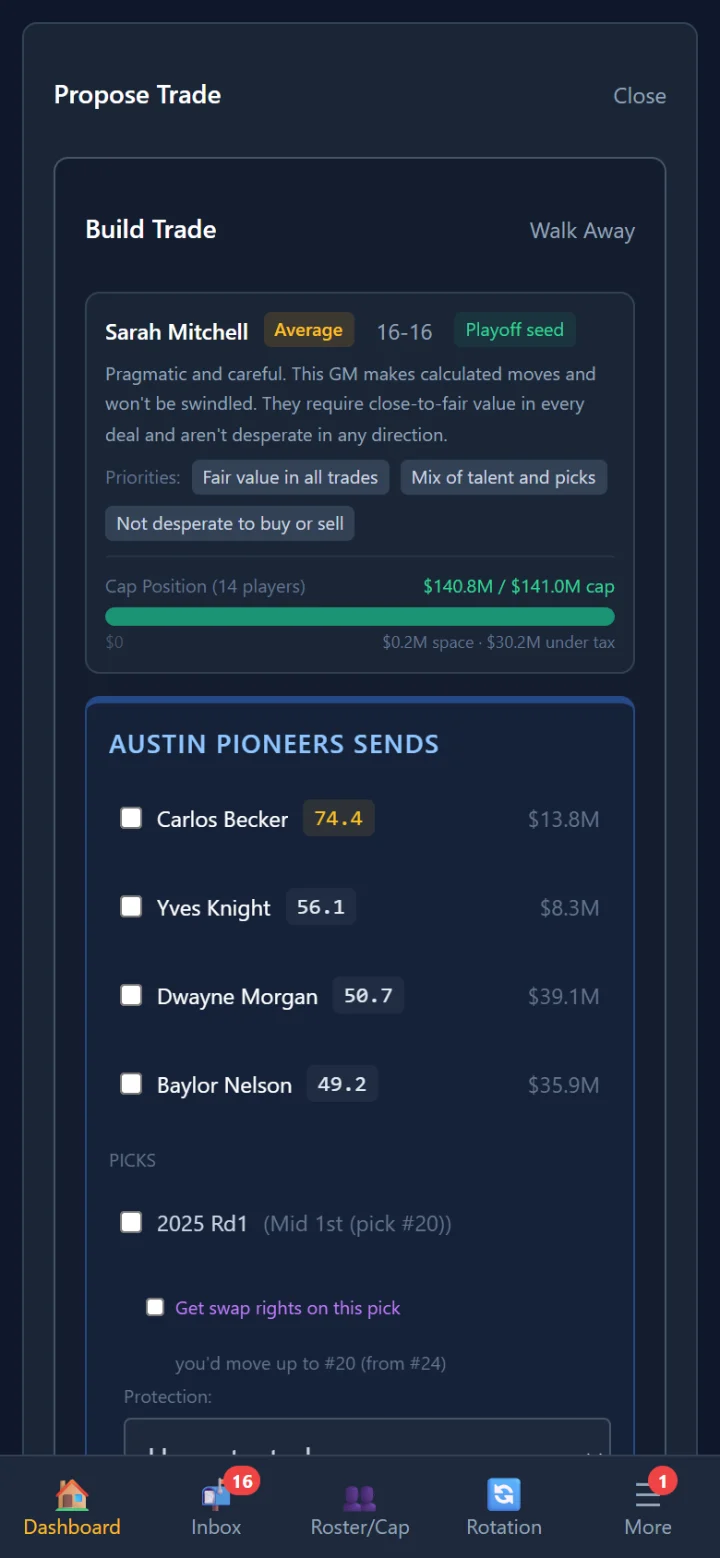
Trades. Every rival GM has a personality and priorities. Build the offer, then make your case.
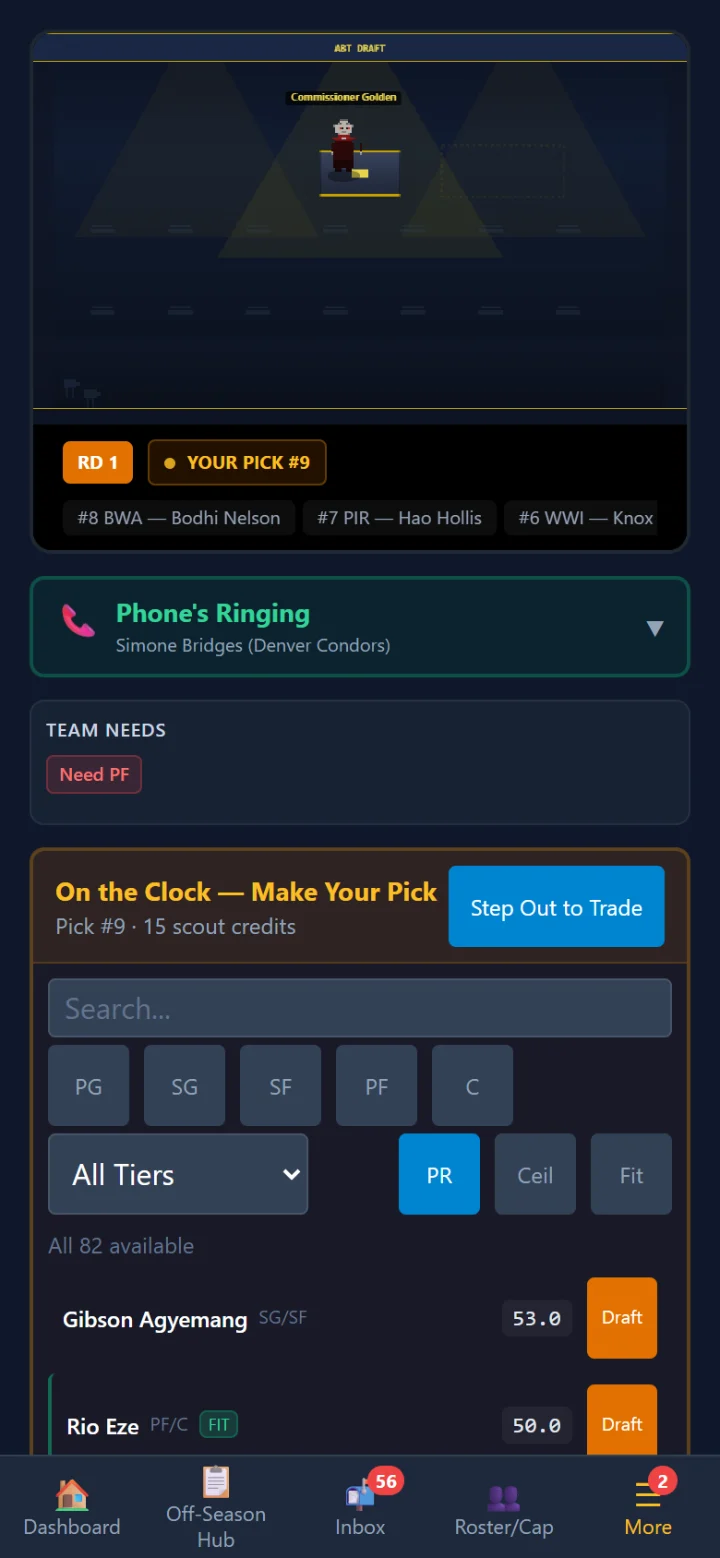
Draft night. On the clock at pick 9, with the phone ringing.
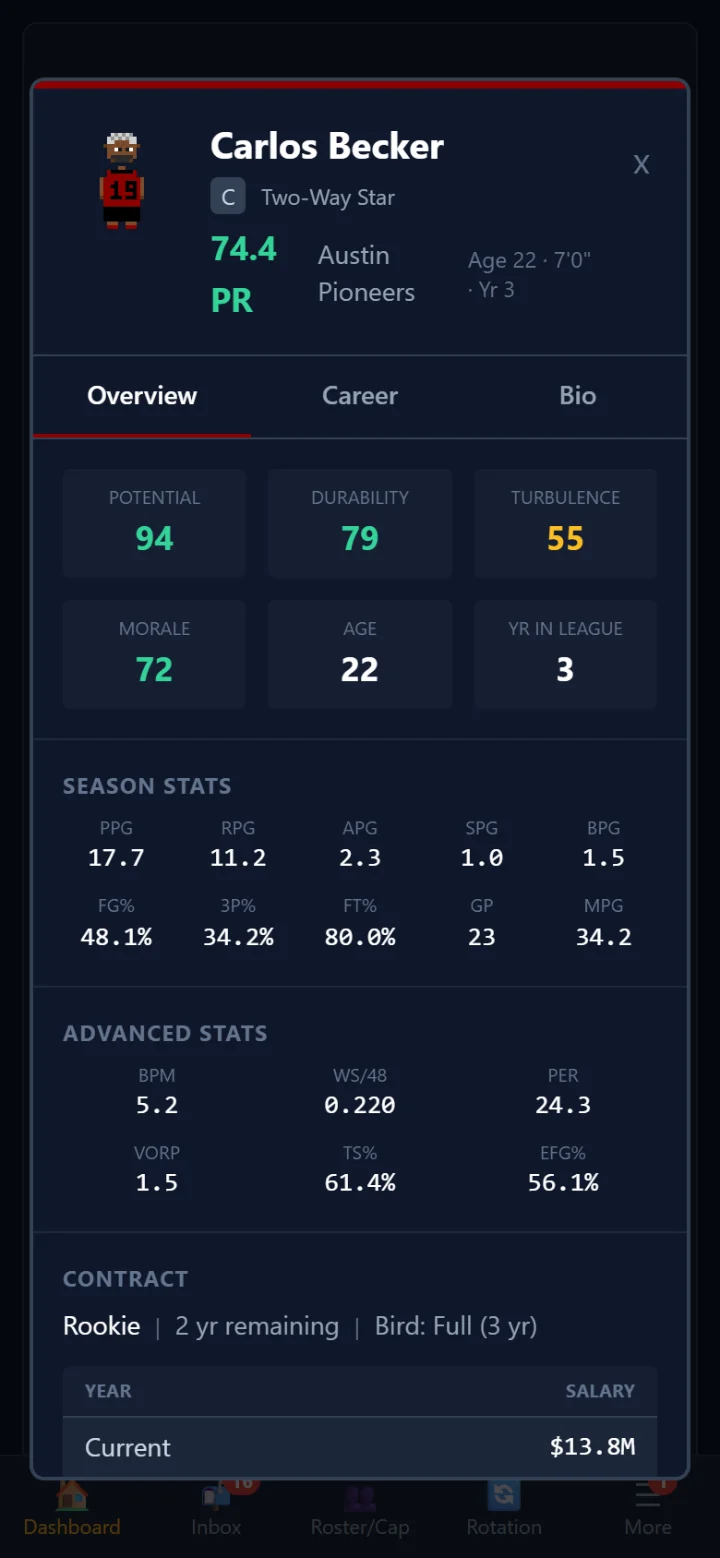
Player card. Ratings, stats and contract for anyone in the league, a tap away.
Real screens from the game, unedited, at a phone's width. They were captured from fresh careers in a test copy of the game; the Miami Riptide was made in the game's team builder.
Memory
Anything you say can be held against you.
The game doesn't leave memory to the AI. It writes down the end of every meeting, word for word, dates it, and hands it to his agent every time you meet again. Promises go on a separate list, and the game checks whether you kept them.
Playable · You decide
Did you promise him anything?
When a meeting ends, a second AI reads it and decides whether you gave your word. Its instructions say:
Record a promise ONLY when the GM, in his own typed words, gave his word that his club WILL do a specific thing for this player.
If in doubt, it is NOT a promise.
In the game the AI makes this call, and decides what kind of promise it was. Here you make it, and any line you pick counts as a promise of more playing time.
Week 20: the audit
The game checks promises every 4 weeks and judges each one once it's 3 weeks old, so a promise made in week 14 comes up in week 20.
Shown larger than in the game
Broken promise: DeAndre Philips
From: Brenner Sports Group (rep for DeAndre Philips) · Week 20
DeAndre Philips's agent called. "You promised more playing time, but nothing has changed. My client feels disrespected."
The promise
Week 14: "I'll put him back in the rotation by Friday. You have my word."
Effect
-8 morale
Discuss in OfficeApologizeExplore trade (off-season)Ignore
Shortened: the real letter also explains the audit, what an apology would win back, and what the break does to his asking price. From the game's guide: A broken promise stays broken for good. From then on his contract ask to your club is 15% higher in extension and free-agency talks, and he opens them frustrated and quicker to walk away.
Promise kept: DeAndre Philips
From: Brenner Sports Group (rep for DeAndre Philips) · Week 20
DeAndre Philips's agent: "You said you'd handle it, and you did. My client noticed."
The promise
Week 14: "I'll put him back in the rotation by Friday. You have my word."
Effect
+6 morale
+6 with Brenner Sports Group
+1 with every other agency
Shortened: the real letter also explains the audit. From the game's guide:
Every promise is written down, audited every 4 weeks and settles 6 weeks after you made it. Keeping it is worth +6 morale, +6 with his agency and +1 with every other agency; breaking it costs 8 morale, and it stays broken.
Then there's nothing to audit, and no letter comes in week 20.
What it would have been worth, from the game's guide: Every promise is written down, audited every 4 weeks and settles 6 weeks after you made it. Keeping it is worth +6 morale, +6 with his agency and +1 with every other agency; breaking it costs 8 morale, and it stays broken.
Filled in with the demo's names. In the game, the letter comes from his real agency.
What he keeps from your meeting
Talk to Hal for two turns and his notes on you appear here, word for word, the way the game files them. It all stays in your browser.
With JavaScript on, your conversation with Hal is filed here the way the game files it.
What he keeps
He keeps how it ended: the last 400 characters, no line longer than 130. The start of a long meeting doesn't survive.
In the game your name goes where it says GM, and the date is the week it happened (here, season 1, week 14).
His opening line isn't on the record. The game only files the rounds of a meeting.
1 of his replies here was a stand-in. It is on the record like the rest, because the demo's server keeps it too.
2 of his replies here were stand-ins. They are on the record like the rest, because the demo's server keeps them too.
His agent reads it in all seven rooms where you deal with him, from his next complaint to extension talks and free agency. DeAndre reads it too.
If you subscribe, it carries into next season until newer meetings push it out, then fades to a short summary.
MEETING RECEIPT · Brenner Sports Group · re: DeAndre Philips · season 1, week 14
Turn
Reply
Mood
His morale
What the game would do next
Each reply moved his morale 5 points at most, the same limit as the game. In the game, a second AI then grades the whole meeting, for −5 to +15 more.
In the game, his agency's view of your club also moves every round: +5 receptive, −2 frustrated, −5 walking out.
Under 30, the clock starts. After 9 weeks he drags teammates down; at 15 he holds out; at 20, a player rated 78 or higher (he's 82) formally demands a trade. That's at a normal temperament; with a volatile one, the line sits higher.
A walk-out is filed against your club. An established agency's walk-out costs you 4 points with each of the league's other eight agencies, and every free agent with an agent asks your club 1% more per incident, up to 10%, this season and, for subscribers, the next.
Built in your browser and saved nowhere: close the tab and he forgets you. In the game, it goes into your save.
What's AI here, and what isn'tThe AI writes what people say. The game keeps the numbers and draws the art.
Written live by an AI
What people say to you: rival GMs, agents, your owner, your players, the scout, the historian and the commissioner. A second AI also reads each meeting and decides whether you made a promise.
Kept by the game
The rules and the numbers: morale, job security, the cap, the audit dates, what a promise is worth and what breaking one costs. A conversation can move a number like morale, but the game decides how far, and stores the result. Some rooms, like this meeting and the airport lounge, keep your exact words. In others, an AI writes a short summary and the game keeps your promises word for word.
Drawn by the game
Every sprite, room and stage on this page comes from the game's own pixel renderers. Nothing is redrawn, and no image generator is involved.
Stand-in replies in the demo are labelled and never move a number. And memory isn't an upgrade: the free season is the same game everyone else plays.
The people
Everyone in the building keeps score.
The AI writes what they say; the game keeps the numbers. Every rival GM remembers the last 30 offers he's seen from you. Your owner re-grades your job security every week from week 5. The locker-room conspiracy theorist trusts you a little less every time you say no. And agencies mark you down for every petty thing you do.
Playable · Pick one
Somebody owns this team, and it isn't you.
You wanted to see me? Have a seat.— Reginald Worthington-Ashby III
Reginald Worthington-Ashby III owns the club. He made his money in artisanal hot dog water, and he's a Win-Now owner.
Names and businesses come from the game's own lists; the pairings are examples.
Same losing season, four different owners. You sit at −0.4 against his goals all year, on the failing side of the game's scale, and he judges you every week from week 5. Nothing else happens: no meetings, no playoffs, no demands.
Job security from 70
Week 2615
703010
Week
Hot seat: 30· Nearly fired: 10
Win-Now owner: job security 70 to 15 by week 26.−3 a week. Hot-seat letters in weeks 18 and 21. Nearly fired in weeks 24 and 26: reset to 15 each time, and every player on your roster loses 10 morale.
Job security from 70, by owner
Owner
His season
Week 26
Win-Now
−3 a week. Hot-seat letters in weeks 18 and 21. Nearly fired in weeks 24 and 26: reset to 15 each time, and every player on your roster loses 10 morale.
15
Cheap
−2 a week. A hot-seat letter in week 24.
26
Balanced
−1 a week. No letters, no warnings.
48
Senile
−1 a week, exactly as Balanced. No letters, no warnings.
48
How the game decides this: the owner
The multipliers are the game's real ones: Win-Now 3.0 · Cheap 1.8 · Balanced 1.5 · Senile 1.5. Senile matches Balanced week to week, then grades the season itself at ×0.3 when it went badly: a losing year barely registers with him.
The hot-seat letter is written fresh each time, but its buttons are fixed. From the week-18 trade deadline on, they are:
Request Meeting with OwnerTrade Block (off-season)Adjust RotationSwallow pride
Build your own club and you keep the old club's type of owner, with a new name and a new business.
Playable · Press send
Send him the same deal twice.
Let's talk business.
The Phoenix Ironclads' GM has already turned this package down once this season.
Your offer: the same package as last time
You already showed me this exact deal and I said no. Nothing about it has changed — if you want a different answer, bring a different offer.
Frustrated
We've been over this exact package and my answer hasn't changed. Sending it again doesn't change the math — it just tells me you're not listening. We're done for the week.
Done talking
The Phoenix Ironclads' GM has already turned this package down once this season.
That's the real cooldown: he won't talk trades with you again until next week.
Both replies are scripted by the game, not written by the AI: send back a package he's already rejected and the engine answers for him. The Phoenix Ironclads are from the game's default league; the package and his look are examples.
When he sends you an offer, you get four buttons:
Accept TradeCounter-OfferWe'll Think About ItNo — Don't Bring This Up Again
Press the last one and that club can't send you the same package, or a bigger version of it, for the rest of the season, unless the offer gets meaningfully better.
He remembers the last 30 offers he's seen from you, and if you subscribe, they carry into next season.
Playable · Answer it
Twice a season, he puts it in writing.
Every club has one player who sees hidden hands everywhere. In weeks 5 and 19 he sends you a request, picked from a hundred possibilities. Here are three.
Card 1 of 3
His trust in you
50
There is a cat. We need to talk about the cat.
From: Omar Rahman
A black cat has crossed in front of our bus at the loading dock before four of our last five losses, and I logged the times: 5:51, 5:52, 5:51, 5:50. That cat is punctual, Coach. But the rule is it is only bad luck if she crosses YOUR path, not if she is on your payroll, so I say we adopt her, give her a lanyard and a name, and let her sleep wherever she wants in the building.
If you agree:The loading-dock cat is now a club employee with a lanyard and the run of the building. (Injury risk up for four weeks while the guys hurdle her at shootaround; the owner loves the cat, so your standing with him rises a little) If you refuse:trust -7 · his morale -3
Sure, whatever keeps you happy.
Omar Rahman is elated — you're finally taking this seriously. (+4 morale, trust +4)
The loading-dock cat is now a club employee with a lanyard and the run of the building. (Injury risk up for four weeks while the guys hurdle her at shootaround; the owner loves the cat, so your standing with him rises a little)
Omar RahmanShe is on our side now; I asked her and she blinked twice.
Absolutely not.
Omar Rahman looks betrayed. "I thought you were on my side." (-3 morale, trust -7)
Omar RahmanThen she keeps crossing at 5:51, so set your watch.
The kiss cam is not what it seems
From: Omar Rahman
The kiss cam has landed on the same couple in row F four games running. Different hats, same couple. Every time, she holds up a program open to one page, and every time our next free throw rims out. We are 0 for 9 at the line right after the kiss cam. The camera guy is a relay. Put one of OUR scouts on that camera, a trained eye, and let him point it wherever the signals are.
If you agree:One of the club's draft scouts now runs the kiss cam at every home game. (Draft scouting less accurate for four weeks; the crowd has never been louder, so team morale rises a little each week for three weeks) If you refuse:trust -8 · his morale -3
Omar Rahman is elated — you're finally taking this seriously. (+4 morale, trust +4)
One of the club's draft scouts now runs the kiss cam at every home game. (Draft scouting less accurate for four weeks; the crowd has never been louder, so team morale rises a little each week for three weeks)
Omar RahmanOur man on the camera. Row F is about to have a very long night.
Omar Rahman looks betrayed. "I thought you were on my side." (-3 morale, trust -8)
Omar RahmanRow F thanks you. Row F thanks you very much.
Omar Rahman timed the shot clock
From: Omar Rahman
The shot clock in our building runs FAST on our end. I timed it from the end of the bench with my kitchen timer, twelve possessions, and our 24 seconds last about 23 and a half while theirs run 24 and change. So we practice to 22 now, on my timer, and I run it. And the timer sits on our bench at home games, face out, so the clock operator knows we know.
If you agree:Practice now runs on his 22-second kitchen timer, and the timer sits on our bench at home games, where the broadcast keeps finding it. (Team morale dips for five weeks; owner confidence down a little) If you refuse:trust -9 · his morale -4
Omar Rahman is elated — you're finally taking this seriously. (+5 morale, trust +4)
Practice now runs on his 22-second kitchen timer, and the timer sits on our bench at home games, where the broadcast keeps finding it. (Team morale dips for five weeks; owner confidence down a little)
Omar RahmanTwenty-two seconds. Let them try to steal from that.
Omar Rahman looks betrayed. "I thought you were on my side." (-4 morale, trust -9)
Omar RahmanHalf a second a trip, Coach. It adds up to a season.
Omar Rahman is a player from the game; casting him as the theorist is an example.
How the game decides this: the theorist
It always costs more than refusing would have, so agreeing and then taking it back is never the cheap way out
If you agree and take it back later:trust -12 · his morale -8 · owner confidence -2
If you agree and take it back later:trust -13 · his morale -8
If you agree and take it back later:trust -14 · his morale -10
Playable · Be petty
GM OFFICE
Feeling Petty?
When a star walks out of extension talks, the game hands you this menu. Every option is real, and so is what it costs you.
KOBIE ANSAH · MORALE72
Kobie is an example player. The menu, the costs and the dice rolls are the game's.
Feeling Petty?
Cold war escalatingAgents league-wide are noticingTrade demand incomingNUCLEAR PETTINESS
Reassign His Parking SpotGive his premium spot to the newest rookie.
-5 morale
Move His Locker to the CornerNext to the janitor's closet.
-8 morale, -2 team, -3% value
Lowlight Film Session45-minute reel of turnovers in front of the team.
-12 morale, -3 team, -5% value
DNP — Coach's DecisionBench him. He's 24 and healthy.
-15 morale, -5 team, -8% value
Leak His Trade Value"Sources say no one offered more than a 2nd rounder."
-15 morale, -4 team, -12% value
Remove His Name from the Gatorade CupsHis just says "PLAYER".
-4 morale, -1 team
Book Him a Middle SeatTeam flies first class. He's in 31B.
-10 morale, -3 team, -3% value
Public Trade Block AnnouncementHold a press conference about shopping him.
-20 morale, -8 team, -15% value
PARKING LOT
KOBIE ANSAHWhere's my spot?!
LOCKER ROOM
KOBIE ANSAHMy stuff's been moved...
WAR ROOM
GMLet's review some film.
KOBIE ANSAHThis is all lowlights!
LOCKER ROOM
GMSit him. Coach's call.
KOBIE ANSAHDNP? I'm healthy!
LOCKER ROOM
REPORTERMarket for Kobie Ansah is thin.
KOBIE ANSAHThey leaked my value?!
TRAINING FACILITY
KOBIE ANSAHIt just says 'PLAYER'?
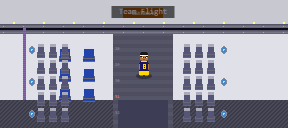
TEAM FLIGHT · 31B
GMPut him in coach. 31B.
KOBIE ANSAHSeat 31B? Seriously?
PRESS ROOM
GMWe're listening to offers.
REPORTERRelated to the extension?
GMBest for the organization.
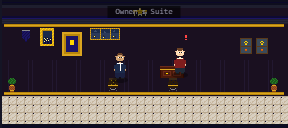
OWNER’S SUITE
OWNERWe need to discuss this.
OWNERThe Kobie Ansah situation...
OWNERReign it in.
GMI'll handle it.
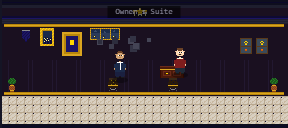
OWNER’S SUITE
OWNERThis is a circus!
OWNERYou're embarrassing us.
OWNERFix this. Now.
GMI understand, sir.
His morale
no change
Team morale
no change
His agency
no change
Every other agency
no change
His trade value
no change
The game rolled its 20% chance of an owner letter: it came.nothing this time.The game rolled its 50% chance that your theorist notices: he did.he didn't.His agent protests every time. The game rolled its 50% chance of an owner reaction: he wants a word.nothing this time.From the third act, every other agency marks your club down 3 each time. This time the league also files it as an incident, and the story costs you another 4 with each of them, because his agency is an established one.Every other agency marks your club down 3 again.His trade value drops another 15%.You rose above it: +2 morale, once. In the game that closes the menu.In the game, Close ends it: the menu goes with the talks screen.
Over the second apron at the deadline? The gods take your sixth-best player.
Everything else here is a straight management game. This part is satire, played with a straight face. If your payroll is over the second apron ($189.0M in season one) at the week-18 trade deadline, your sixth-best player goes to a pyre the whole league attends. His guaranteed salary stays on your books.
Playable · Drag it
$195.4MSECOND APRON
Luxury tax bill: $61.5M$6.4M over the second apron
CapTax1st2nd
Cap$141.0MTax$171.0M1st$178.0M2nd$189.0M
Acts as a HARD CAP on ADDING salary — no outside signing, waiver claim, trade or extension may take you over this line
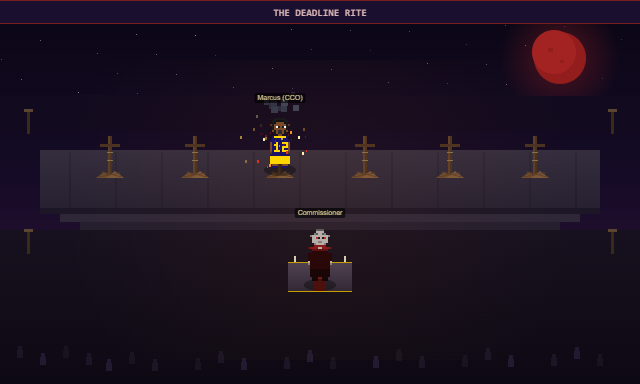
THE DEADLINE RITE: stand over this line on trade-deadline day and your sixth-best player is sacrificed to the basketball gods — gone from the league, with his remaining guaranteed salary left on your books as dead money
Zone
Payroll
Rules
UNDER CAP
≤ $141.0M
Can sign free agents using cap space directly
OVER CAP
$141.1M-$171.0M
Cannot sign free agents with cap space (must use exceptions)
Bird Rights allow re-signing your own players over the cap
Over the cap you sign with exceptions instead: the Non-Taxpayer MLE, the Bi-Annual Exception and minimum contracts.
LUXURY TAX
$171.1M-$178.0M
Team pays a graduated luxury tax on every dollar over the tax line
Tax rates: $1.50 per dollar for the first $5M, then $1.75, $2.50, $3.25 — climbing another $0.50 for every further $5M, with no ceiling
FIRST APRON
$178.1M-$189.0M
Lose the Bi-Annual Exception — the apron is where it dies
Cannot aggregate salaries in trades (no combining players to match salary)
SECOND APRON
> $189.0M
Acts as a HARD CAP on ADDING salary — no outside signing, waiver claim, trade or extension may take you over this line
THE DEADLINE RITE: stand over this line on trade-deadline day and your sixth-best player is sacrificed to the basketball gods — gone from the league, with his remaining guaranteed salary left on your books as dead money
The payroll is an example. These are season-one lines, and all four grow 4.5% a season. The tax uses the game's own brackets, before any repeat-offender surcharge.
Commissioner Golden
Beat 1 of 8
Commissioner Golden
The books were read at the deadline.
One club stood above the second apron.
The gods will have their due.
Cincinnati Corsairs. $6.4M over the line.
The dead money, of course, remains.
The books are balanced. The gods are pleased.
How you're warned
Before the books are read
You are warned well in advance: a commissioner's memo at season open, a marked-tribute warning four weeks before the deadline naming who would burn as your roster stands, and a final notice the week before.
Two weeks out, a marked player speaks up:
"Two weeks. I've stopped sleeping. The league took my passport last month and my kids asked why there's a wooden stake on the news with my name trending next to it. Move the money. Please."
Afterwards
@FanZone
The gods took Marcus Vale and the dead money STAYS?? Brutal league.
@ABTInsider
Deadline Rite complete: Marcus Vale (CCO). League sources describe the gods as "appeased, for now."
The League Office letter
If he was yours:The gods take the player. The accountants keep the bill.
If he wasn't:Your club crossed no line. Attendance at the pyre is nonetheless mandatory.
Sixth-best · $189.0M · Week 18−12 moralefor every teammate who watches
Marcus Vale is an example. The stage and every line are the game's; this page runs the ceremony a little faster, and leaves out his last words. The books are read in week 18 of your free season.
More of the game
Perfectly normal league business.
Six more systems your league office considers routine. Open any of them.
File:Tampering.Three targets a season, and the league is counting.
During the season you can quietly approach another club's player in the last year of his contract, up to three a season. If he reaches free agency, your offer to him gets +15 for the contact.
When the off-season opens, the league investigates. The more players you approached, the likelier it catches you: 20%, 36% or 48.8% for one, two or three.
If it does, you lose your furthest-out first-round pick (or a second-rounder, or $5M if you have neither), and the commissioner writes:
NOTICE: Tampering Violation — Penalty Assessed
File:Operation DeAndre.Your free agent gave his word to another club. You can fly out to his house. Once.
If a player you're losing agrees terms with another club in free agency, you can send up to three people to his house and stay until he signs with you. (No relation to the demo's DeAndre.) The night plays out hour by hour:
His agent is at the door
Their GM is on the driveway
Somebody posted the chair
He has gone quiet
When he breaks, it sounds like one of these:
...Fine. Fine! Somebody give me the pen.
You all flew out here. What am I supposed to say?
Everyone's already seen it. It's done, isn't it.
...Okay. Okay. I'm staying.
He signs for 80 to 97% of the money, depending on how bad the night got. The league fines you $2.5M to $10M, by how public it was, and takes one or two second-round picks.
It is a once-in-a-career play — there is no second one.
From then on, whenever he talks to your club, the AI's notes on that night end with this line. (Those talks come in season two.)
You are the club that did it. He will bring it up. Do not pretend it did not happen.
File:Fake injuries.Rest a healthy man. List him as hurt.
You can shelve a healthy player for 5, 8 or 12 days during the regular season, which is about 3, 4 or 6 games, since an injury heals two days for every game played. One fake per season carries no risk at all; every fake after that raises the chance the league catches you at season's end.
Catch risk: with 1 fake there is none. With 2 fakes in a season it is 25 percent, and it climbs from there with each additional fake.
Get caught and it's a $3M fine, plus a draft pick from the third fake on. End a fake early and the commissioner opens an inquiry. His letter ends:
I trust this will be the last time we need to have this conversation.
File:The commissioner's favor.The night before the lottery, the commissioner offers to help.
Commissioner Golden
Tomorrow's lottery.
These things are... unpredictable.
But unpredictable can be... guided.
I'm not asking for anything today.
But someday, I may need a favor.
And when that day comes...
I'll expect you to remember this conversation.
So. What do you say?
It is a one-time offer available in season 1 only, to a team already in the lottery. Accepting moves you into a top-3 slot and creates a favour the commissioner comes back to collect 1 to 3 seasons later.
He collects in season two or later, so it's a subscriber's problem. What he asks for is a dice roll: a vote (25%), $12M a year for two seasons (35%), your next first-round pick (25%), or your best player sitting out ten games (15%). Refuse, and half the time he leaks the story, and every player on your roster loses 15 morale.
His subject lines:
A small matter requiring your attention
League development contribution required
I need your first-round pick
League wellness program — mandatory participation
File:Getting fired.Job security is a number. Zero is a number too.
Job security is re-evaluated every week from week 5 onward, driven by your progress against the owner's goals and scaled by what kind of owner you have. Reach zero and you are fired.
At 30 or below you get a hot-seat warning every 3 weeks. At 10 or below you are reset to 15 with a final warning, and every player on your roster loses 10 morale. At 0 you are fired, the team reverts to AI control, and a Commissioner interview is queued.
And in a meeting with your owner:
Hostile or disrespectful conduct can get you fired on the spot regardless of the number.
Once you're fired, you get three rounds with Commissioner Golden to talk your way back in. Convince him and he gives you the league's least valuable club. Fail, and your career is over. From the scene:
Golden's jaw tightens. He hasn't blinked in an uncomfortable amount of time.
File:Promising a pony.A promise is a promise. Even that one.
A promise no club could deliver (a pony, a car, dinner at his mother's) is still a promise if you put a date on it: it breaks on that date with the full cost of any broken promise.
A letter tells you the moment you make one, with a Make good on it button: the owner pays for it, and it costs you job security with him (the letter says how much).
Break it and it costs what any broken promise costs: 8 morale, and it stays broken.
Every promise you made, kept or broken, and what it cost you.
Every grudge: agencies remember how last season went, and so do their clients.
Every contract, the last 30 offers each rival GM has seen from you, and how you did on your owner's orders.
See the screen the game shows when the free season ends
Season one complete
The club story isn't over.
Your free season is finished — the full game, nothing held back. Your dynasty is saved exactly as you left it. Around the league, though, nobody forgets:
You promised playerwhat you promised in week n. He remembers.
agent at agency hasn't forgotten how last season went. Their clients heard about it too.
player, player, player all hit free agency next summer.
Subscribe to carry all of it — every promise, every grudge, every contract — into next season.
Continue the dynastyNot now
Your save stays put either way.
What the game shows when your free season ends. The list is built from your save; these are the three kinds of line it can show, with the names left blank.
Why it's a subscription
Every reply in this game is written live, and every one costs money to run, for as long as you play. With a one-time price, the game would lose money on the people who play it most. So the first season is free, and after that it's a subscription, with nothing else to buy.
Read the developer's note
From the developer's note
[…] So, back to my crossroads, I decided that I wanted to build the game I always wanted--a GM mode that felt realistic AND where the computer opponents could talk back to you.
[…] The possibilities are endless. Yes, you can chat with characters just to mess with them. You can get fired--that's one of my favorite interaction sequences. Or, you can really try to win. You can build good relationships with agents to get better deals, you can convince GMs to make trades with you based on your own guile, and you can even tamper with upcoming free agents. It's all possible. It's the GM mode I always wanted.
I'm always adding to it. I'm trying to make it more realistic and funnier. […]
[…] I am trying to make money on this game (with the amount of time I spend on it, I kind of have to). If I offered the game for a one-time purchase price, I could end up losing--in theory--thousands of dollars off of one player. That's extreme, but possible! There are other GM simulation games out there. […] They can charge once--or not at all--because nobody's paying for their GMs to think and talk to you like a real person would.
No ads. No microtransactions. You get everything the game has to offer whether you subscribe monthly or annually. […] Obviously, you can cancel whenever you want.
[…] The best solution was letting people play one free season. […]
— the developer
Word for word from the developer's note on why he made the game. […] marks what's left out.
No ads, no microtransactions, nothing else to buy. Payments go through Stripe, and you can cancel anytime.
The game's update logAt least 154 update notes between August 4 and October 28, 2026, on 43 different days.Counted from the game's in-app What's New feed.
FAQ
Straight answers.
Is the first season really free?
Yes. One career through a complete season: opening night, the playoffs, the awards, the lottery, the draft and free agency. It's the whole game, and you don't need a card.
Do I need a card?
No. Sign up with your email, confirm it, and choose "Start first season free". You only pay if you subscribe.
What happens when the free season ends?
The game stops when you advance out of free agency. Your save stays exactly as it is. Subscribe and you carry it into season two; don't, and it waits for you.
Why a subscription and not a one-time price?
Because every reply in the game is written live, and each one costs money to run for as long as you play. A one-time price would lose money on the people who play most. So it's $39.99 a year or $4.99 a month, with nothing else to buy: no ads, no microtransactions.
Can I cancel?
Yes, anytime. Nothing is deleted when a subscription lapses: your careers are locked and kept for at least a year, and if you subscribe again you pick up where you left off. A career still in its first season stays playable, as on a free account.
How long is a season?
26 weeks and 82 games, then the playoffs and the off-season. There's no clock: the league only moves when you advance it, so a season takes as long as you like.
Can I play on my phone?
Yes. It runs in your phone's browser: the same game as on a computer, with nothing to install. On a small screen it rearranges itself for your thumbs, with a bar along the bottom, cards instead of wide tables, and a rotation you set by tapping. Your careers live on your account, so you can start on one device and pick up on another.
Are the cap rules real?
Yes, they work like the real thing: a $141M cap, a $171M tax line and aprons at $178M and $189M in season one, all growing 4.5% a season, with exceptions, Bird rights and a graduated luxury tax. Plus one rule no real league has: the Deadline Rite.
Isn't this just a chatbot with a basketball skin?
No. The AI writes what people say. The game keeps the rules, the numbers and the record, and decides what each character gets to know about your past. Some rooms file your exact words; others file a summary of two sentences at most, plus any promise you made, word for word. An AI judges whether something you typed was a promise, and the game checks it against what you actually typed. Either way, the AI is handed the record; it doesn't keep its own.
Will I meet Hal Brenner in the game?
No. Hal Brenner and DeAndre Philips exist only in this demo. Every club, player, agent and owner in the game is fictional, too.